Farewell Message to a Coworker: Six Examples
Choose a farewell message that fits your coworker and the occasion. Use six original examples, a personal thank-you rewrite and a practical delivery plan.

A farewell message to a coworker can be two or three sentences: thank them for something real, acknowledge the departure accurately and finish with a wish you mean. Choose words that fit how well you know them and where the message will be read.
These six original examples are written to the colleague who is leaving. They cover a brief professional note, a close colleague's new job, a specific thank-you, a team card, retirement and a departure whose circumstances are private.
Choose the message that fits your relationship
You can be kind without claiming a close friendship. If you know the person well, a small shared detail can make the message sound like you. If you mainly know them through meetings, a respectful short wish is enough.
Use “Congratulations on your new role” only when that is what they have shared. Use retirement wording for someone who is actually retiring. If you do not know the reason for leaving, wish them well without guessing.
All names and details in the examples below are invented. Replace the name and keep only statements that are true for your relationship. They are finished sample messages, not customer quotes.
1. For a colleague you do not know well
Use this for a shared card or a brief private note when your contact has mainly been professional.
Best wishes as you leave, Jordan. I have appreciated working with you and wish you well for what comes next.
You do not need to add an inside joke, a long personal memory or a promise to meet regularly.
2. For a close coworker starting a new job
Use this when the new role has been announced and you would genuinely like to stay in touch.
Congratulations on your new role, Nina. I will miss our lunchtime conversations and the way you helped me think a problem through. I hope your first weeks go well. I would love to keep in touch if you would too.
Replace the lunch detail with something you actually shared. If you offer to keep in touch, choose a way that both of you would be comfortable using.
3. For someone who helped you learn the work
Use this when you want the note to recognize a particular contribution rather than just mark the last day.
Thank you, Asha, for the time you spent explaining my first handover and answering the questions I was embarrassed to ask. You helped me become more confident in the work. I am glad we got to work together, and I wish you all the best.
Choose one action you remember: clear feedback, a patient explanation or a useful way of working. Keep private project details out of a shared card.
4. For a card from the participating team
Use this as an agreed opening or closing for a group card, leaving space for individual messages.
With our thanks and best wishes, Ben. We have appreciated the care you put into our shared work, and we wanted you to have these messages from the people who worked alongside you. We wish you well for what comes next.
Use “we” when you are speaking for the contributors who agreed to that wording. Sign with the team or participating names as appropriate; do not include someone as a sender without their agreement.
5. For a coworker who is retiring
Use this when retirement is the actual occasion. It does not assume plans for travel, family time or a particular hobby.
Happy retirement, Priya. Thank you for sharing your knowledge and making time for people learning the job. I have enjoyed working alongside you. I hope you enjoy the chance to choose how you spend your days.
If you know a plan they are happy to talk about, you can add a specific wish. A warm retirement message also works without naming what they will do next.
6. When the reason for leaving has not been shared
Use this when the departure is sudden, personal or simply not something the colleague wants discussed.
Thank you for the time we worked together, Chris. I appreciated your thoughtful contributions in our meetings. I wanted to send you my best wishes and say that I am glad our paths crossed.
Choose a detail you can honestly support, or leave the note at a simple thank-you and wish. You do not need to ask them to explain the departure.
Make one broad sentence more personal
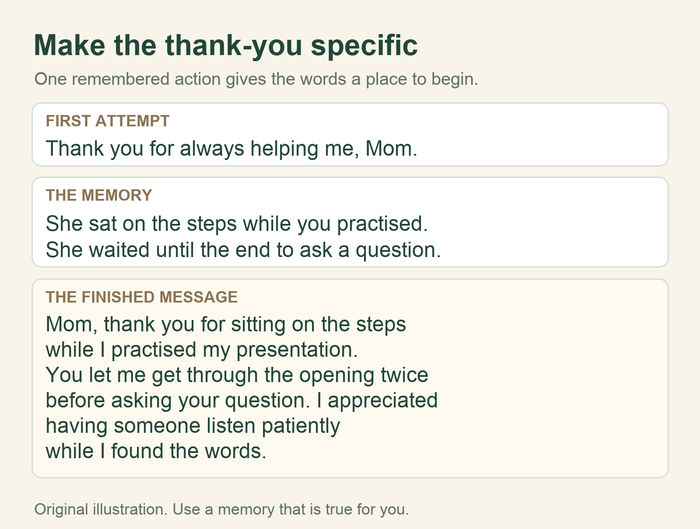
Specificity comes from an action the other person would recognize. You do not need to make the message longer.
Broad: “You have been so supportive.”
More personal: “You read through my presentation with me the day before the meeting and helped me make the main point clear.”
Finish by saying why that mattered: “I walked into the room feeling prepared.” A true scene gives the thank-you some substance. If you do not have a scene like that, use a shorter professional message instead of inventing one.
Choose where to put the message
- A shared card: keep the wording suitable for colleagues who may read it before the recipient. One specific thank-you and a short wish usually fit.
- A private note or message: use this for a longer personal memory or an invitation to stay in touch. Address the person directly.
- A team announcement or public post: use only information the colleague is comfortable sharing with that audience. A public post is a different choice from signing a card.
Send the message at a time that suits the actual farewell. If a group card has a closing date, contribute before it is handed over. If you missed the gathering, a brief private note afterwards can still say what you wanted to say.
For a digital card or email, check the recipient's name and the message once before sending. If you are including a personal contact detail, choose a channel where you are comfortable sharing it. There is no need to add a phone number to every farewell message.
A finished invitation for a team card
Here is an illustrative message for a coordinator collecting farewell notes. The name and schedule are invented; use your actual arrangements.
We are putting together a leaving card for Nina to give her on Monday. If you would like to add a message, please send me a few sentences by Thursday afternoon. It is completely optional. I will put the messages in the card with the names you want to use; please keep anything private for a separate note to Nina.
Keep the contribution request separate from any money collection. People can write a message without joining a gift. Deliver the finished card without requiring the recipient to read every note aloud.
If you also want a keepsake, see our coworker retirement gift guide when retirement is the occasion, or the professional farewell gift guide for a manager who is leaving. The card-writing task can be complete before you choose a gift.
Questions about farewell messages
Can I use a funny farewell message?
Yes, if the joke is kind, understandable and welcome to the recipient. A familiar coffee preference can be safer than a joke about their age, performance or reason for leaving. If you are unsure, give the genuine thank-you on its own.
What should I write if we did not work together much?
Use the first example and keep it brief. “I wish you well for what comes next” does not claim a close relationship. Add an appreciation only if you can honestly say it.
Can I write the same message in the card and privately?
You can put a short wish in the shared card and send a more personal memory privately. They can each have a clear purpose; neither needs to repeat the whole message.
What if I am the person leaving?
Change the speaker's point of view. Your note should thank the people you worked with and say what you would like to acknowledge as you leave. The examples on this page address the departing colleague, so copying them unchanged would give the message the wrong voice.
If the team also wants to give a song
A personal song can accompany the finished card when music suits the colleague. Use a few agreed work memories and describe the actual occasion, such as retirement or moving to another office. If that fits your plan, start the Songbond song questions, where you enter the recipient, memories and music preferences.
You can also give the message on its own. A specific thank-you is a finished farewell gesture.